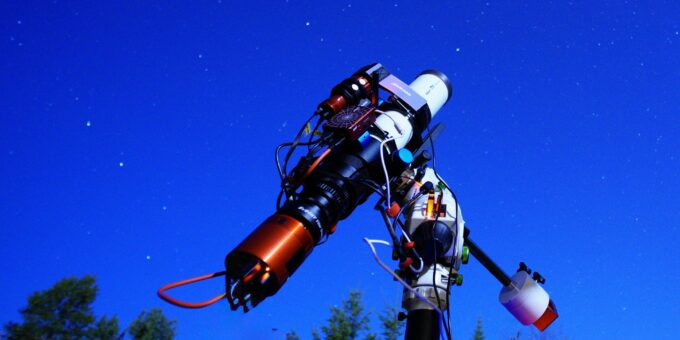
If you think you need a giant observatory-class instrument to explore galaxies and nebulae, think again. Learning How to Observe Deep Sky Objects with Small Telescopes opens a universe of discovery without requiring expensive equipment.
Small telescopes are powerful. With the right techniques, you can observe star clusters, bright nebulae, and even distant galaxies from your backyard.
This complete guide will show you exactly How to Observe Deep Sky Objects with Small Telescopes, even if you are just starting out.
What Are Deep Sky Objects?
Deep sky objects (DSOs) are celestial objects located outside our solar system. They include:
- Galaxies
- Nebulae
- Globular clusters
- Open star clusters
Unlike planets, DSOs often appear faint and diffuse. However, many are visible through telescopes as small as 70mm to 130mm aperture.
For foundational learning, resources like deep sky observing guides provide excellent object lists for beginners.
Why Small Telescopes Are Enough
One common misconception is that only large telescopes can reveal deep sky wonders. In reality, small telescopes offer several advantages:
- Portable and easy to set up
- Quick thermal stabilization
- Affordable for beginners
- Wide field of view
Mastering How to Observe Deep Sky Objects with Small Telescopes is more about technique than aperture.
Choose the Right Small Telescope
If you are starting out, consider:
Refractors (70mm–100mm)
Sharp images. Minimal maintenance. Great for bright nebulae and clusters.
Reflectors (114mm–130mm)
More light-gathering ability. Excellent for galaxies and globular clusters.
Before buying, read comparison reviews through telescope buying guides to understand specifications and value options.
Find Dark Skies
The most critical factor in How to Observe Deep Sky Objects with Small Telescopes is sky darkness.
Light pollution washes out faint objects. Even the best telescope cannot overcome bright urban skies.
Use tools like light pollution maps to locate darker observing sites near you.
Allow Your Eyes to Adapt
Dark adaptation takes about 20–30 minutes. Avoid phone screens. Use red flashlights if necessary.
Your eyes become dramatically more sensitive in darkness. This makes faint galaxies easier to detect.
Use the Right Magnification
Higher magnification does not always mean better views.
Start with low-power eyepieces (20mm–32mm). This provides a wider field of view and brighter image.
Increase magnification gradually once the object is centered.
Best Deep Sky Objects for Small Telescopes
The Orion Nebula (M42)
Located in the constellation Orion, M42 is one of the brightest nebulae in the sky. Even small telescopes reveal its glowing gas cloud.
The Andromeda Galaxy (M31)
This spiral galaxy is visible as a faint smudge under dark skies. A 100mm telescope reveals its bright core.
The Pleiades (M45)
An open star cluster best viewed at low magnification. Wide-field telescopes show dozens of stars.
The Hercules Globular Cluster (M13)
Appears as a fuzzy ball in small scopes. With steady skies, individual stars begin to resolve.
Learning these beginner-friendly targets strengthens your skills in How to Observe Deep Sky Objects with Small Telescopes.
Master Averted Vision
Averted vision is a powerful technique. Instead of looking directly at a faint object, look slightly to the side.
Your peripheral vision is more sensitive to low light. This makes dim nebulae more visible.
This technique alone can dramatically improve results.
Use Filters Wisely
Nebula filters like UHC or OIII enhance contrast for emission nebulae.
However, filters do not improve galaxies or star clusters.
Use them selectively for objects like the Orion Nebula or the Lagoon Nebula.
Keep Observing Notes
Maintaining a log improves progress. Record:
- Date and time
- Location
- Telescope used
- Sky conditions
- Observational details
Over time, your observing skills will noticeably sharpen.
Plan Your Observing Sessions
Preparation is key when mastering How to Observe Deep Sky Objects with Small Telescopes.
Use printable charts or planning tools from interactive sky chart planners to know what objects are visible each season.
Seasonal planning ensures you maximize clear nights.
Common Mistakes to Avoid
Observing from Bright Areas
Move to darker locations whenever possible.
Expecting Astrophotography-Level Views
Visual observing differs from long-exposure images. Subtle detail requires patience.
Rushing Setup
Allow your telescope to cool to outdoor temperature for best clarity.
Patience Is the Real Upgrade
The longer you observe, the more you see.
Fine details emerge slowly. Subtle structure becomes clearer with practice.
Consistency matters more than equipment upgrades.
Turning Your Astronomy Passion into Opportunity
Interestingly, many enthusiasts who master How to Observe Deep Sky Objects with Small Telescopes start sharing their experiences online.
Blogging about telescope comparisons, writing beginner guides, or creating deep sky observing lists can evolve into an online business.
When monetizing, creators often compare affiliate vs dropshipping strategies. A dropshipping business requires handling customer logistics. In contrast, affiliate marketing allows you to recommend astronomy gear and earn commissions without managing inventory.
High-quality equipment reviews and tutorials can generate passive income over time, especially in high-interest hobby niches.
If you are evaluating monetization methods, reading about ecommerce and dropshipping strategies can help you understand your options clearly.
Advanced Tips for Small Telescope Success
Collimate Reflectors Regularly
Proper alignment ensures sharp images.
Use a Stable Mount
Shaky mounts reduce clarity. Stability improves detail detection.
Observe After Midnight
Skies often become darker and steadier later at night.
Final Thoughts
Learning How to Observe Deep Sky Objects with Small Telescopes proves that you do not need massive equipment to explore the universe.
With dark skies, proper technique, and patience, small telescopes reveal breathtaking celestial wonders.
Start with bright objects. Practice averted vision. Plan your sessions carefully. Over time, your confidence and skill will grow.
The universe is vast. And even a modest telescope can unlock its beauty.
