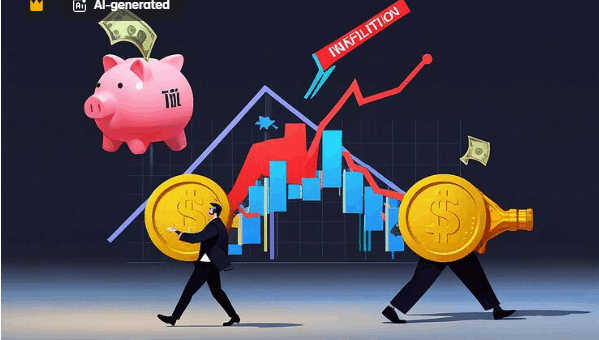
Understanding The Relationship Between Inflation, Employment, and Economic Growth is essential for anyone interested in economics, business, investing, or public policy. These three economic indicators are closely connected and significantly influence the financial health of a country. Governments and central banks continuously monitor inflation, employment levels, and economic growth to make informed decisions that promote long-term stability.
While moderate inflation often accompanies economic expansion, excessive inflation or persistently high unemployment can slow growth and reduce consumer confidence. In this guide, we’ll explore how these economic forces interact, why they matter, and what they mean for businesses, investors, and consumers.
What Is Inflation?
Inflation refers to the general increase in the prices of goods and services over time. As inflation rises, the purchasing power of money decreases, meaning consumers can buy fewer goods with the same amount of income.
Inflation is commonly measured using the Consumer Price Index (CPI) and other economic indicators published by government agencies.
Learn more about inflation from the International Monetary Fund (IMF).
What Is Employment?
Employment measures the percentage of people who have jobs and are actively participating in the workforce. High employment generally indicates a healthy economy because more people earn income, spend money, and contribute to economic activity.
Low unemployment often reflects strong business confidence and increased demand for workers.
What Is Economic Growth?
Economic growth refers to the increase in a country’s production of goods and services over time. It is usually measured by Gross Domestic Product (GDP).
When GDP grows consistently, businesses expand, incomes rise, investment increases, and living standards generally improve.
For additional information about GDP and economic indicators, visit the World Bank.
Understanding the Relationship Between Inflation, Employment, and Economic Growth
The Relationship Between Inflation, Employment, and Economic Growth is complex because each factor influences the others. Policymakers aim to maintain a balance that supports sustainable growth without allowing inflation or unemployment to become excessive.
Economic Growth and Employment
As businesses expand, they typically hire more workers to meet rising demand. Increased employment boosts household income, encouraging higher consumer spending. This additional spending supports further business growth and economic expansion.
Healthy economic growth often leads to:
- Higher employment levels
- Increased wages
- Greater consumer confidence
- Higher business investment
- Improved government tax revenue
Employment and Inflation
When unemployment falls significantly, businesses compete for skilled workers by offering higher wages. While rising wages improve household income, they can also increase production costs.
Companies may respond by raising prices, contributing to inflation. Economists often discuss this relationship using the Phillips Curve, which suggests an inverse relationship between unemployment and inflation over the short term.
Inflation and Economic Growth
Moderate inflation is generally considered a sign of a growing economy because it reflects healthy demand for goods and services.
However, excessive inflation can:
- Reduce purchasing power
- Increase borrowing costs
- Create economic uncertainty
- Lower consumer spending
- Discourage business investment
Conversely, extremely low inflation or deflation may indicate weak economic demand and slow growth.
The Role of Central Banks
Central banks play a critical role in maintaining economic stability. Institutions such as the Federal Reserve, the European Central Bank, and other national central banks adjust monetary policy to manage inflation while supporting employment and economic growth.
Common monetary policy tools include:
- Interest rate adjustments
- Open market operations
- Reserve requirements
- Quantitative easing
These measures influence borrowing, spending, investment, and overall economic activity.
How Interest Rates Affect the Economy
Interest rates have a direct impact on inflation, employment, and economic growth.
Lower Interest Rates
Lower borrowing costs encourage consumers and businesses to spend and invest more. This can stimulate job creation and economic growth but may also contribute to higher inflation if demand grows too quickly.
Higher Interest Rates
Higher interest rates reduce borrowing and spending, helping control inflation. However, they may also slow business expansion and increase unemployment if economic activity declines.
Supply and Demand Dynamics
Inflation is heavily influenced by supply and demand.
Demand-pull inflation occurs when consumer demand exceeds available supply. Cost-push inflation results from rising production costs such as wages, transportation, or raw materials.
Understanding these forces helps businesses prepare pricing strategies and inventory planning.
How Businesses Respond to Economic Changes
Businesses constantly adapt to changing economic conditions.
Common strategies include:
- Improving operational efficiency
- Diversifying suppliers
- Adjusting pricing strategies
- Investing in automation
- Managing inventory more effectively
Companies that monitor economic indicators can make more informed business decisions during periods of uncertainty.
Impacts on Consumers
Consumers experience the effects of inflation, employment, and economic growth every day.
Examples include:
- Changes in grocery prices
- Housing affordability
- Job opportunities
- Mortgage interest rates
- Household purchasing power
Strong employment typically supports higher incomes, while excessive inflation reduces the value of those earnings.
Investment Considerations
Investors closely monitor economic indicators before making financial decisions.
During periods of stable growth and moderate inflation, businesses often experience higher profits, supporting stock market performance. Conversely, high inflation and slowing growth can create market volatility.
Diversification remains an important strategy for managing investment risk during changing economic conditions.
Building Financial Resilience
Economic conditions also encourage many individuals to diversify their income sources. Some entrepreneurs build an online business to supplement traditional employment and reduce reliance on a single source of income.
Others explore affiliate marketing as a way to create additional passive income by recommending products or services through websites, blogs, or social media.
Many beginners compare affiliate vs dropshipping before choosing an online business model. While a dropshipping business involves selling products fulfilled by suppliers, affiliate marketing focuses on earning commissions without managing inventory.
Learn more in our guide to affiliate marketing or explore our comparison of affiliate vs dropshipping.
Why Policymakers Seek Balance
No economy can eliminate inflation or unemployment entirely. Instead, policymakers aim to maintain moderate inflation, strong employment, and sustainable economic growth.
This balance supports:
- Stable consumer prices
- Healthy labor markets
- Business investment
- Long-term productivity
- Economic resilience
Achieving these objectives requires careful coordination of monetary and fiscal policies.
Conclusion
The Relationship Between Inflation, Employment, and Economic Growth demonstrates how interconnected modern economies truly are. Moderate inflation can accompany healthy growth, while strong employment increases consumer spending and supports business expansion. However, excessive inflation or prolonged unemployment can slow economic progress and reduce financial stability.
