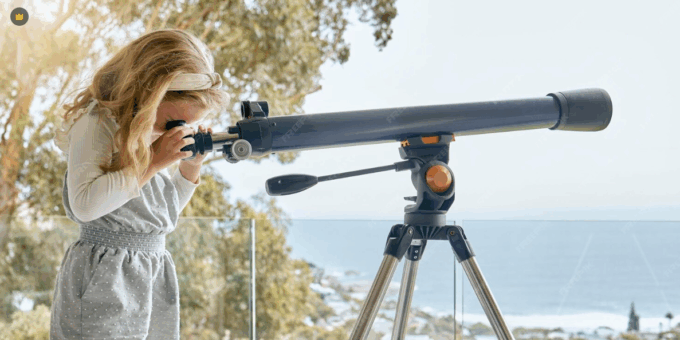
How to Build a Simple DIY Telescope at Home is one of the most rewarding science projects for beginners, families, and astronomy enthusiasts. You do not need expensive equipment or advanced technical skills. With basic materials and a clear plan, you can create a functional telescope that introduces you to the wonders of the night sky.
This guide explains the science behind telescopes, the materials you need, step-by-step instructions, and practical tips for getting the best viewing experience. By the end, you will understand not only how to build a telescope, but also how it works.
Why Build a DIY Telescope at Home?
Building your own telescope offers educational and practical benefits.
You learn optics, problem-solving, and patience. Much like starting an online business, the process teaches planning and experimentation. The satisfaction of observing the Moon or stars through something you built yourself is unmatched.
A DIY telescope is also budget-friendly and perfect for introducing kids to science.
Understanding the Basics of How Telescopes Work
Before learning how to build a simple DIY telescope at home, it helps to understand basic telescope principles.
Refraction and Lenses
Most beginner telescopes use lenses to bend light. This type is called a refracting telescope.
The main lens (objective lens) gathers light, while the smaller lens (eyepiece) magnifies the image.
Magnification Explained Simply
Magnification depends on the focal lengths of the lenses. A longer focal length objective and a shorter focal length eyepiece produce higher magnification.
Types of DIY Telescopes You Can Build
There are several simple telescope designs suitable for home projects.
Refracting Telescope
This is the easiest option for beginners. It uses two lenses and a tube.
Galilean Telescope
Inspired by Galileo’s original design, this telescope is simple but has a narrow field of view.
In this guide, we focus on a basic refracting telescope because it offers the best balance between simplicity and performance.
Materials Needed to Build a Simple DIY Telescope
Gathering materials is the first hands-on step in how to build a simple DIY telescope at home.
- Objective convex lens (50–70 mm diameter)
- Eyepiece convex lens (small diameter)
- Cardboard tube or PVC pipe
- Black paper or matte black paint
- Tape or glue
- Ruler
- Craft knife
You can find lenses online or repurpose them from magnifying glasses.
For lens selection basics, refer to
telescope optics basics.
Step-by-Step Instructions: How to Build a Simple DIY Telescope at Home
Step 1: Measure the Focal Length of the Objective Lens
Hold the lens toward a distant object and focus the image onto paper. Measure the distance between the lens and the sharp image. This is the focal length.
Step 2: Prepare the Telescope Tube
Cut the tube slightly longer than the focal length of the objective lens. Line the inside with black paper or paint to reduce light reflections.
Step 3: Attach the Objective Lens
Secure the objective lens at one end of the tube. Ensure it is centered.
Step 4: Install the Eyepiece Lens
Place the eyepiece lens near the opposite end. It should be adjustable to allow focusing.
Step 5: Test and Adjust
Point the telescope at a distant object during daylight. Adjust the eyepiece until the image appears sharp.
This completes the core process of how to build a simple DIY telescope at home.
Improving Image Quality
Your DIY telescope can be improved with a few simple adjustments.
Reduce Light Leaks
Seal gaps in the tube to prevent stray light.
Stabilize the Telescope
Mount the telescope on a tripod or homemade stand to reduce shaking.
What Can You See with a DIY Telescope?
While not as powerful as professional telescopes, a DIY model still offers exciting views.
- The Moon’s craters
- Bright planets like Jupiter and Saturn
- Star clusters
For beginner observation tips, explore
NASA skywatching tips.
Safety Tips When Using a DIY Telescope
Never point your telescope at the Sun without a proper solar filter. Doing so can cause permanent eye damage.
This rule is essential, even during partial solar eclipses.
Teaching Kids with a DIY Telescope
Building a telescope together is a powerful learning experience.
Children learn patience, curiosity, and basic physics. Just as exploring affiliate marketing starts with understanding simple concepts, astronomy learning should begin with hands-on experiences.
You can pair this activity with our internal guide:
Astronomy for Beginners.
Common Mistakes to Avoid
- Using poor-quality lenses
- Skipping tube interior darkening
- Expecting professional-level magnification
Understanding limitations prevents frustration.
DIY Telescope vs Buying a Telescope
Many people wonder whether building is worth it.
A DIY telescope is educational and affordable. Buying a telescope offers better performance but less learning value.
This comparison is similar to affiliate vs dropshipping. Both approaches work, but goals and experience determine the best choice.
Upgrading Your DIY Telescope Over Time
You can gradually improve your telescope.
- Replace lenses with higher-quality optics
- Add a finder scope
- Build a sturdier mount
Incremental upgrades reflect smart long-term thinking, much like building passive income streams step by step.
Using DIY Projects to Inspire Future Skills
DIY science projects encourage creativity and problem-solving.
These skills apply beyond astronomy. Whether someone later explores a dropshipping business or a scientific career, hands-on learning builds confidence.
External Learning Resources for DIY Telescope Builders
For additional inspiration and designs, visit
DIY telescope projects, which includes user-created telescope builds.
Final Thoughts on How to Build a Simple DIY Telescope at Home
How to Build a Simple DIY Telescope at Home is not just a science project. It is a gateway to understanding the universe and developing valuable skills.
With simple materials, patience, and curiosity, you can build a working telescope and explore the night sky. The experience teaches optics, problem-solving, and appreciation for astronomy.
Whether you are a beginner, a parent, or a lifelong learner, building a DIY telescope is a meaningful and memorable journey into science.
